Jewish Cultural Quarter
Create videos to be used during the opening ceremony of the National Holocaust Museum, which will be broadcast live on television.

The creation of the Netherlands' first-ever Holocaust Museum was many years in the making, making its opening a truly historic occasion.
For the live opening ceremony, broadcast by NOS on NPO 1, we guided viewers through the story of the museum and the adjacent Hollandsche Schouwburg. Through four cinematic films produced by XSAGA Video, we followed six young people who symbolized the new generation entrusted with carrying these stories forward. Along their journey, they encountered a series of performances that were interwoven with live performances from the synagogue, strengthening both the narrative and the emotional impact of this profound moment.
An important objective was also to present the museum as a whole in a respectful and compelling way, serving as both an introduction and an invitation for future visitors. To achieve this, we commissioned a special recording of Bach's Erbarme Dich, performed in both German and Hebrew. Accompanied by this deeply meaningful soundtrack, viewers experienced the museum through the eyes of the six young people, creating an immersive journey that conveyed the museum's mission on multiple emotional and symbolic levels.

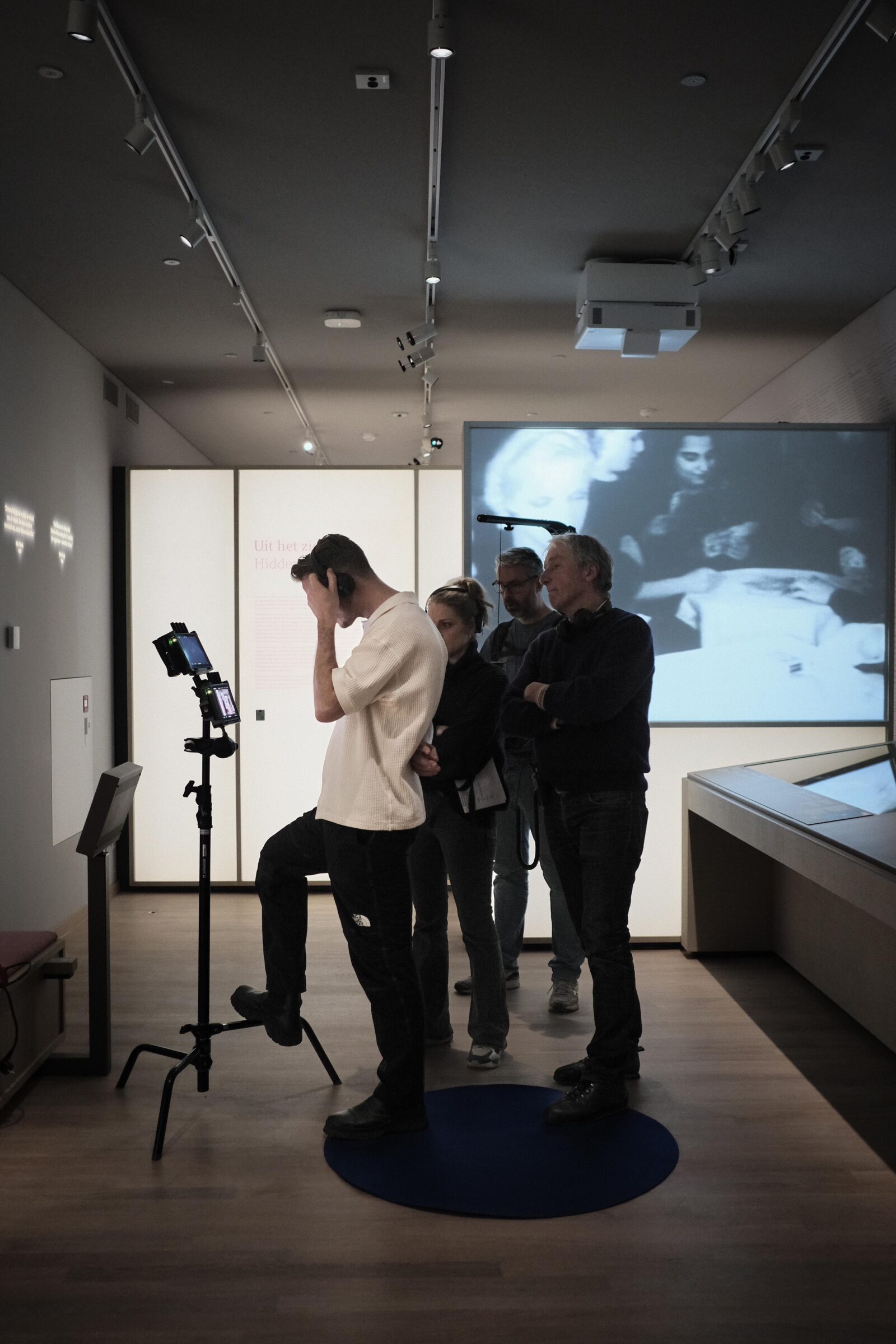
The films represented a distinctive creative approach. They were not only used as the narrative thread throughout the live television broadcast—allowing the audience to discover far more of the museum and its story—but also introduced a new generation of storytellers. Six young people, recruited through Theater Na de Dam, became the emotional guides of the films, while a specially commissioned recording of Bach's Erbarme Dich served as the soundtrack, adding another layer of meaning to the experience.Every script was carefully crafted to communicate the museum's mission with accuracy, sensitivity, and respect. The films adopted a cinematic yet understated visual style that reflected the weight of the subject matter while remaining accessible to a broad audience. Within a limited running time, they succeeded in capturing the essence of the museum without overwhelming viewers with information.
Watched live by more than one million television viewers and amplified through extensive media coverage, the films not only introduced the National Holocaust Museum to a wide audience but also created a lasting emotional connection. The complete opening ceremony was broadcast live by NOS on NPO 1, culminating in the official opening of the museum by King Willem-Alexander together with a Holocaust survivor and the survivor's great-grandchild. The full broadcast remains available to watch on NPO Start.


